BPC 157
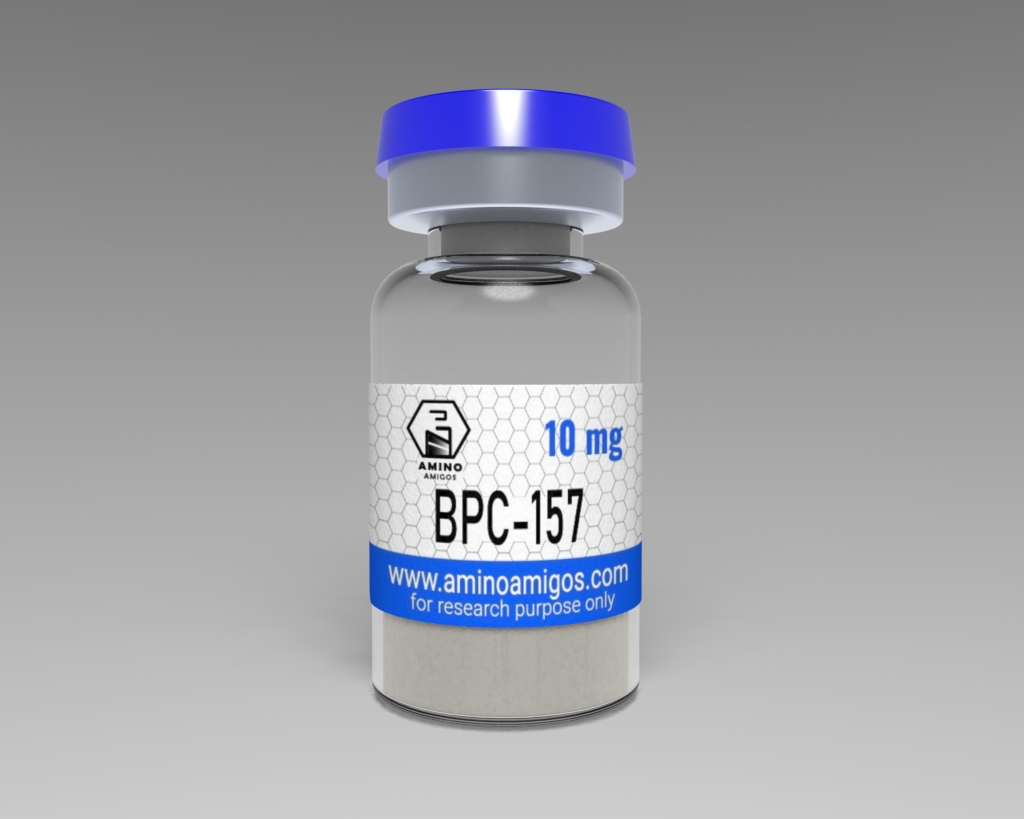
Upon receipt, you will receive an airtight vial of lyophilized powder. To reconstitute the powder, you will require bacteriostatic water and syringe, see Reconstitution Guide.
If you have any inquiries or need assistance regarding the reconstitution process or proper storage, please do not hesitate to contact us via email or live chat. Our team is here to provide support.
BPC-157, short for Body Protection Compound-157, is a peptide that occurs naturally in the human body. It is composed of 15 amino acids and is derived from a protein called the gastric juice protein.
BPC-157 has been studied for its potential regenerative and healing effects on various tissues and organs, including the gastrointestinal tract, musculoskeletal system, and central nervous system. It has been shown to promote cell growth, angiogenesis (the formation of new blood vessels), tissue repair, and to have anti-inflammatory and antioxidant effects.
BPC-157 is currently being researched for its potential therapeutic uses in conditions such as inflammatory bowel disease, muscle and tendon injuries, osteoarthritis, and neurodegenerative diseases. It is usually administered by injection, either subcutaneously or intramuscularly, and has been found to be generally well-tolerated in clinical trials with few side effects.
Research
In the article Intra-Articular Injection of BPC-157 for Multiple Types of Knee Pain of the 16 patients, 12 had received only BPC-157 as an intra-articular injection. In this group, 11 of the 12 patients (91.6%) had significant improvement in knee pain, whereas 1 patient (8.3 %) had no improvement. The other 4 patients received a combination of 2 peptide injections of BPC-157 and TB4. Of the patients who received both peptides, 75% showed significant improvement, but 25% had no relief of their knee pain. Overall, 14 of 16 patients (87.5%) had relief of their knee pain when BPC-157 or a combination of BPC-157 and TB4 was used. The survey’s main goal was to determine whether BPC-157 helped with multiple types of knee pain in a primary care setting.
(1) Stable Gastric Pentadecapeptide BPC-157 and Wound Healing
(2) Pentadecapeptide BPC-157 and the central nervous system
(3) Stable gastric pentadecapeptide BPC-157: novel therapy in gastrointestinal tract
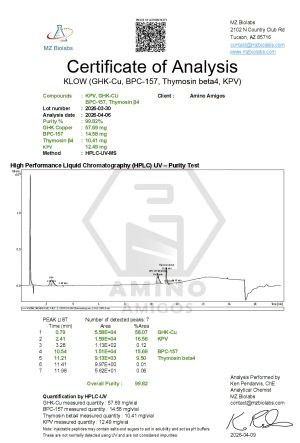
Lab Report
Related products
107 in stock
BLEND 10mgBPC/5mgTB
$70.009 in stock
Thymosin Alpha One 10mg
Original price was: $80.00.$75.00Current price is: $75.00.50 in stock
MOTS-C 10mg
$65.0039 in stock
DSIP 4mg
$35.00253 in stock
Vitamin C Serum
Original price was: $35.00.$30.00Current price is: $30.00.61 in stock
SS-31 15mg
$35.0099 in stock